

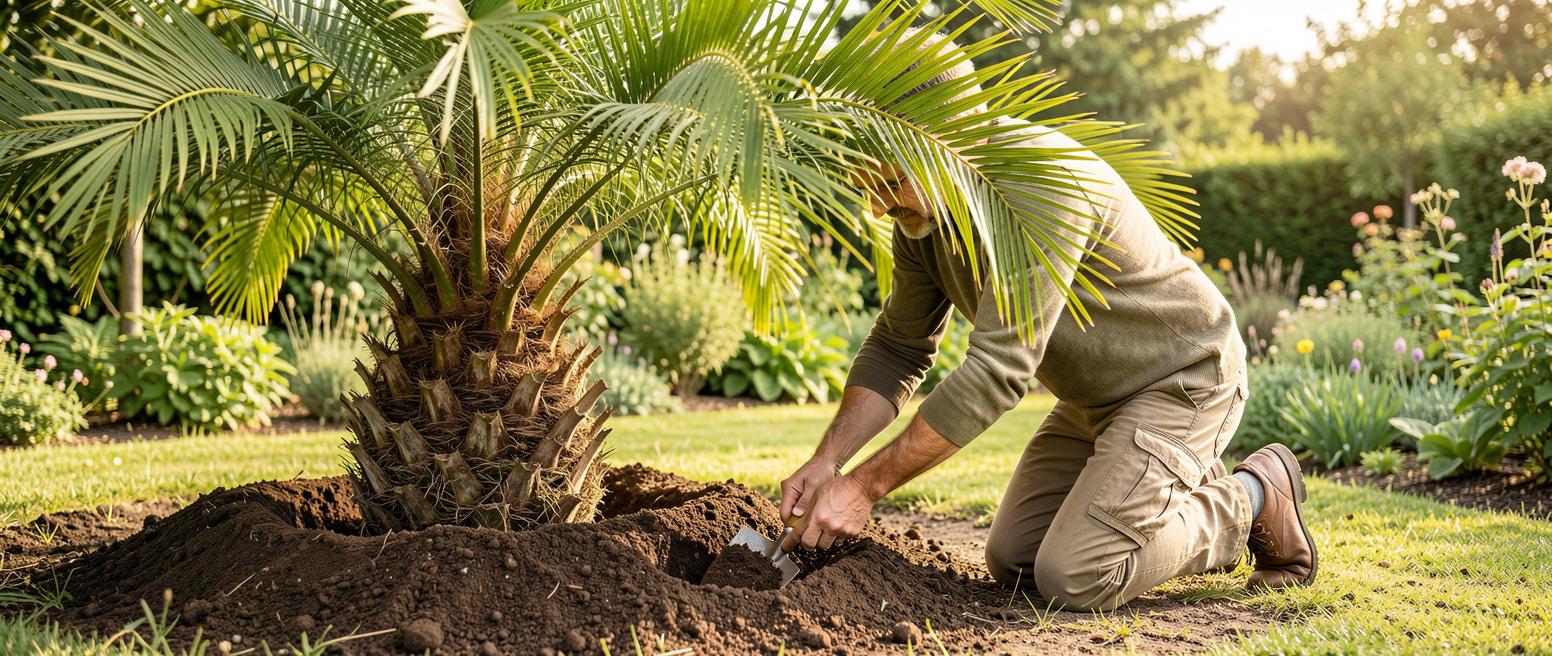
Most palms do not die from too much care, but from too little water. A palm is not a cactus: in nature its root system sits in moisture almost all of the time, deep below ground.
Care at a glance
Palms bring atmosphere to the home and the garden, and they are far easier to keep than their reputation suggests. Even so, plenty of confusion remains about how to care for them. This guide covers everything you need, from the first bucket of water to winter protection.
The biggest misconception comes from the image of the desert. What you see above ground often continues much further below it. A palm's roots grow straight down and reach the groundwater there, so the plant rarely goes short. If your palm is in a pot, you take over that role.
How a palm grows

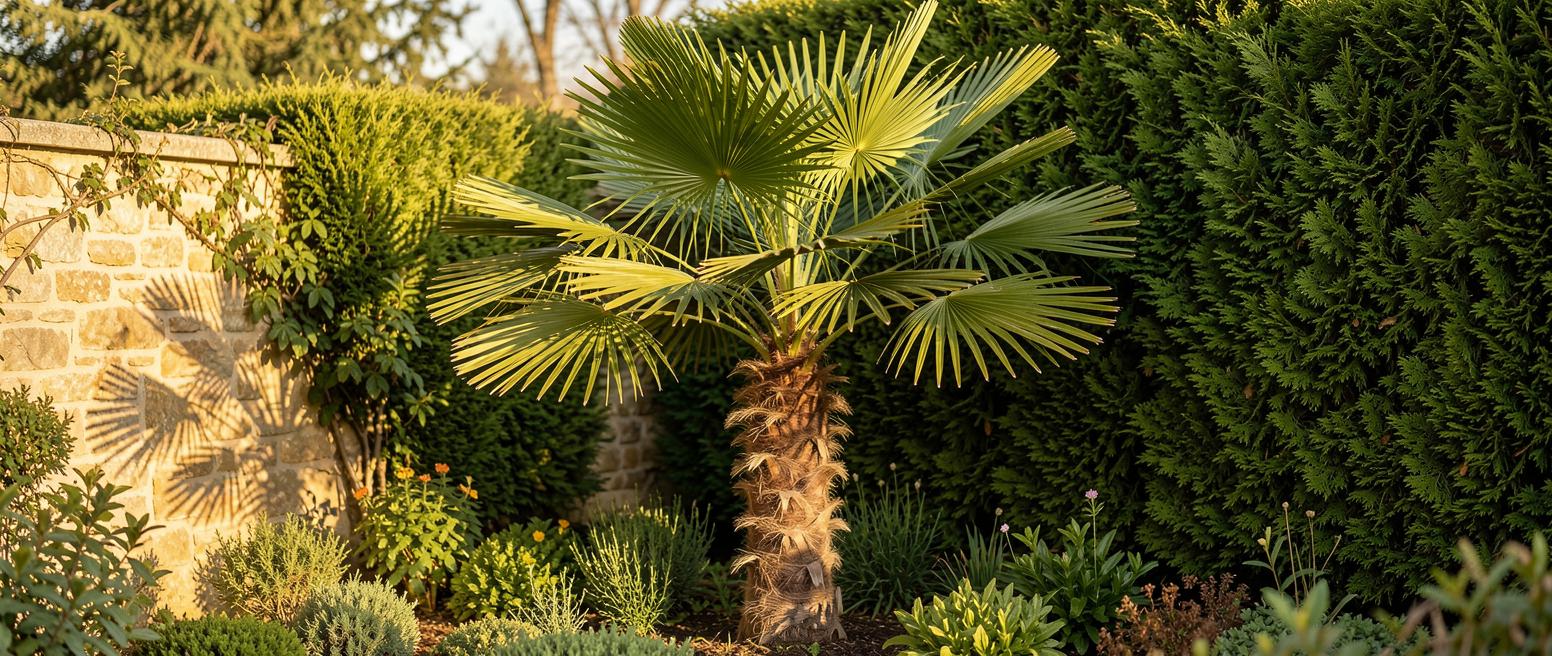
A palm has no side branches. All the leaves emerge from a single point at the top of the trunk, the heart or growing point. That keeps the crown high, so the tree takes little sun away from the rest of your garden.
The trunk grows roughly 5 to 30 centimetres a year, depending on the species, the position and the amount of sun. New leaves appear all year round, peaking in spring and summer.
Of the roughly 4,000 palm species, the majority grow in the tropics and subtropics, with the Amazon region and the Indo-Malayan region as the main centres. Broadly speaking there are two leaf shapes: fan leaves, which you see on most hardy garden palms, and feather leaves, which occur mainly on indoor palms.
Soil and nutrition
Palms need a nutrient-rich soil that also lets water through. Our own Teeninga Palmen nutrient soil is composed for exactly that and can simply be mixed with ordinary potting compost.
- In open ground: mix 2 to 4 bags of nutrient soil into the soil around the root ball. After that, the soil generally needs no further attention.
- In a pot: refresh the soil once every two years.
- Without nutrient soil deficiency symptoms will appear over time, visible as dull or yellow leaves.
The right position
Which spot works best differs per species, and the product page for each palm states this specifically. As a general rule: sun to partial shade, and sheltered from strong wind.
Do not put a palm that has just come from the nursery or out of winter straight into full midday sun. The leaves can scorch. Build the sun exposure up over two to three weeks.
Watering

In their natural environment, palms get a downpour over them periodically. That rhythm works well in the Netherlands too. Water generously about once every three days and let the soil dry out slightly in between, without the root ball ever becoming bone dry.
- Make sure excess water can always drain away. Make holes in the base of the pot if necessary.
- Never let the root ball dry out. Drooping leaves are the first signal.
- Not too much and not too little: the soil may feel moist, never soaking wet.
- Just planted? Water generously two to three times a week during the first year.
Feeding
Feeding matters most for palms in a pot, because the supply there is limited. Use good soil, our own brand or Pokon palm compost, and apply Palm Focus weekly during the peak season. That product is developed specifically for palms and produces dark green leaves.
If the palm is in open ground, use Palm Focus for the first two years. After that the roots sit deep enough to take up nutrients themselves, unless the plant clearly shows a deficiency.
Pruning
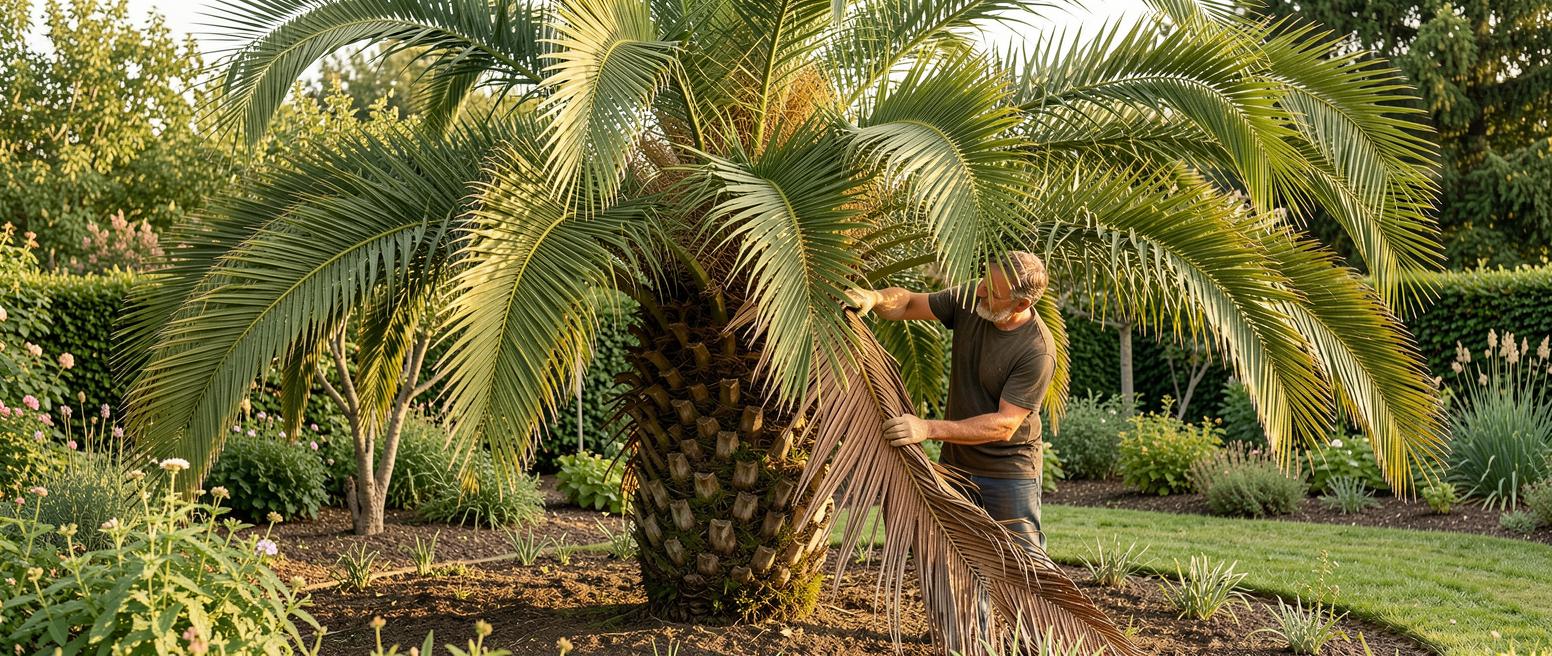
Pruning a palm is simple: remove any leaves that are brown, yellow or damaged. That not only looks better, it also encourages new leaves to form. If the foliage has been lost entirely after a hard winter, you can cut all the leaves away during the growing season. The palm will then come back more quickly.
Pots and repotting
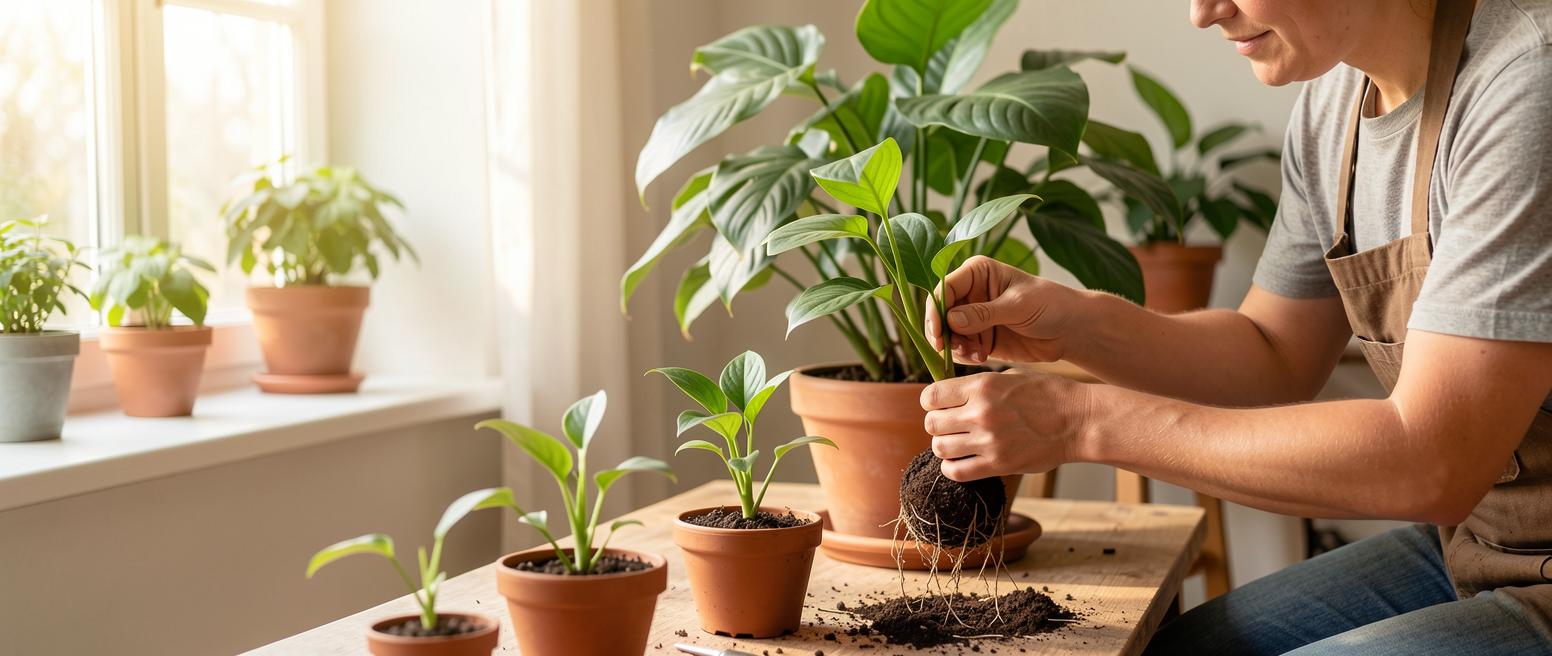
On average a palm only needs repotting once every five years. Do this preferably in late April or early May, so the roots have the whole summer to establish.
If you want to keep using the same pot, you can slice away roughly a fifth from underneath the root ball and put the palm back.

- Make sure there are holes in the base, because roots that stand permanently in water will rot.
- If the pot stays outside, line the inside with bubble wrap against frost.
- Give the palm a few weeks of rest after repotting, out of harsh sun and wind.
- Water generously and mist the leaves regularly, for example with the garden hose.
The palm through the year
All the palms we import are selected for the Dutch climate and tolerate temperatures around freezing. The condition is that they stay dry and that the frost does not last too long.
What to do and when
Remove dead winter foliage, start feeding and repot in late April if needed.
Water generously once every three days and apply Palm Focus weekly. This is the growing period.
Spray the heart preventively against fungus and make sure no water stays sitting in it.
At minus 6 degrees or colder, wrap with fleece, jute, reed matting or heating cable.
Palms in a pot can be moved to a cool, dry and light spot from late October until mid-April. If the palm is in open ground, old sheets, pine branches or reed matting around the trunk work excellently as protection.

Diseases and deficiency symptoms
The growing point is the palm's most vulnerable spot. Fungi and bacteria get their chance as soon as that point is damaged or stays wet for a long time. Protection and dryness are therefore most important in winter.
Even if all the foliage freezes, you do not have to write the palm off. As long as the growing point is intact, the plant will simply come back in spring.
Yellow or light green leaves
If the leaves discolour while the stems stay green, that usually points to iron deficiency. It occurs mainly in chalky soil or at a high pH. Apply iron in that case. If the palm does not pick up, magnesium is the next step.
Preventive treatment
Spray the growing point in October and November, and again at the start of spring, with a fungicide such as Sulphon, Baycor or Rosacur. Leave foliage that dies off during winter in place until spring; it protects the heart from the cold.
What a palm trunk looks like inside

A palm trunk has no growth rings like an oak or a beech. Instead, the trunk is full of fine fibre bundles that carry water from the roots to the leaves. Those fibres also make the trunk remarkably flexible, which explains why palms usually survive a storm where other trees snap.
Not sure about your palm?
Send us a photo of the leaves or the trunk and we will take a look with you. Nutrient soil, Palm Focus, pots and reed matting are all available in our webshop.
Ask your question
Share:
What is the best way to plant a palm tree?
Spathiphyllum - Peace Lily