

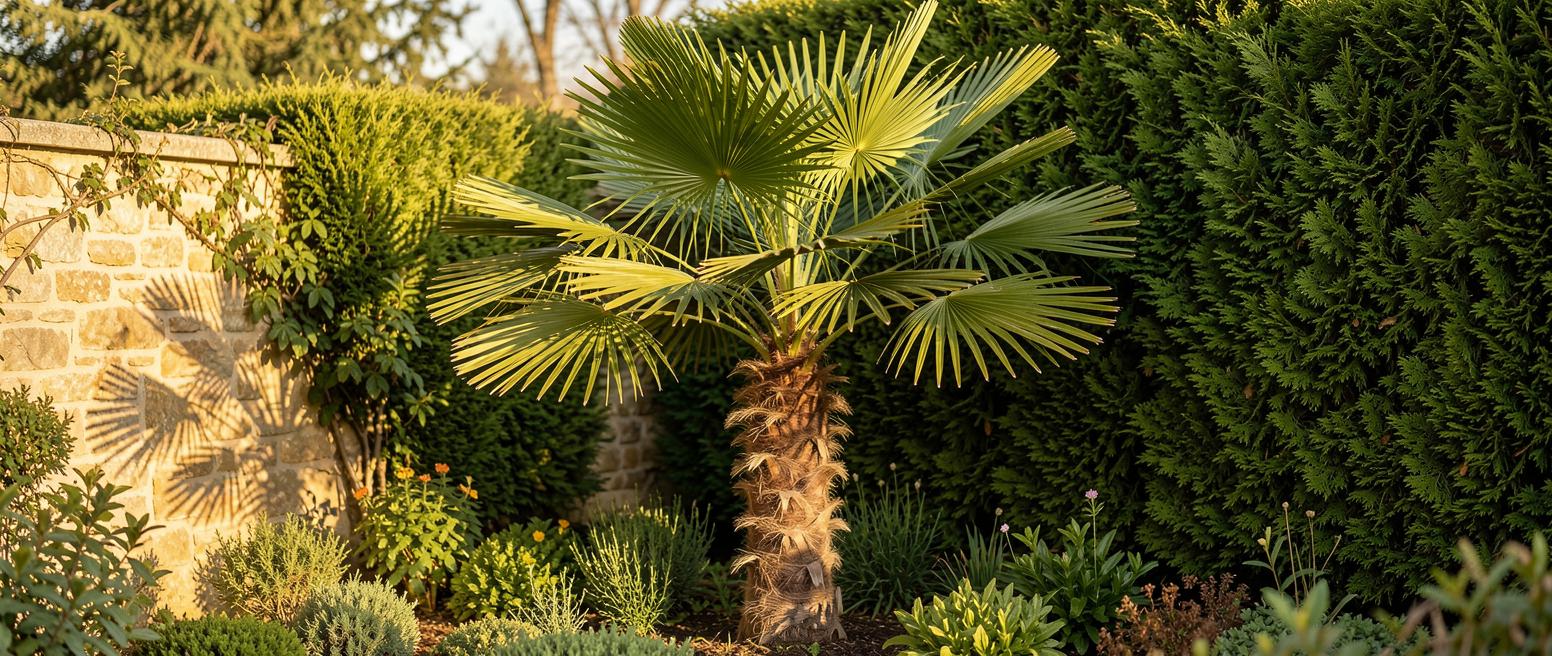
A palm that doesn't establish itself is almost always too wet or in the wrong soil. Both are determined the day you plant it, and can't be easily changed afterwards.
Planting at a glance
You've bought a palm and it needs to go into the ground. It's not complicated work, but there are a few choices you only make once. The location, drainage, and soil together determine whether the palm will thrive in the coming years or remain stuck in its old root ball.
Below, we'll walk you through these choices step by step, from digging the hole to the first feeding.
Choosing the right spot

Choose the spot before you start digging. Sun to partial shade works for almost any garden palm; the product page for your specific species will indicate its exact requirements.
More important than sun is wind in winter. Summer wind hardly bothers a palm, but an open spot fully exposed to east wind and frost is a risk. A wall, a fence, or an evergreen hedge behind it can make a difference of several degrees on harsh nights.
Testing drainage
Palm roots cannot tolerate prolonged waterlogging. If the soil remains wet, root rot will occur, which is usually fatal. Therefore, first test the drainage: dig a hole about 40 centimeters deep, fill it with water, and see how long it takes to drain. If it's gone within a few hours, you're good. If it's still there the next day, you need to intervene.
- Create a drainage layer: for a pot of 35 to 50 centimeters, dig a hole about one meter deep and one meter wide. Fill the bottom layer generously with gravel or broken roof tiles.
- Above this, fill with good potting soil to about 10 centimeters below the palm's roots.
- Make the top layer lighter, by mixing Mediterranean potting soil with the rest. This is where the palm will be planted.
- If the water still doesn't drain, plant it raised, 30 to 60 centimeters above ground level, for example, on a mound or in a raised bed.
A planting hole with loose soil in heavy clay acts like a bucket: water flows in, but not out. Ensure the drainage layer has an outlet, or plant it raised.
The right soil
A palm has specific soil requirements and will not simply accept any potting soil. If the new soil doesn't connect well with the root ball, the roots will remain confined to their old ball, and growth will stagnate. You'll see this reflected in pale or yellow leaves a season later.
The best results are achieved with full Mediterranean potting soil, or our own Teeninga Palmen potting soil. Mixing with universal potting soil is acceptable, but don't cut corners here: the soil is the only thing you cannot change after planting.
Always mix the potting soil partly with the existing garden soil. This creates a gradual transition and allows the roots to grow into the surrounding soil more quickly.
When to plant
The best period runs from early March to October. Since all our palms are container-grown, you can technically plant them all year round, as long as it's not severely freezing. The roots are already in a ball and will not be damaged during planting.
If you plant late in the season, keep in mind that the palm may not be fully rooted during its first winter. Provide extra protection around the trunk and growth point during that first winter.
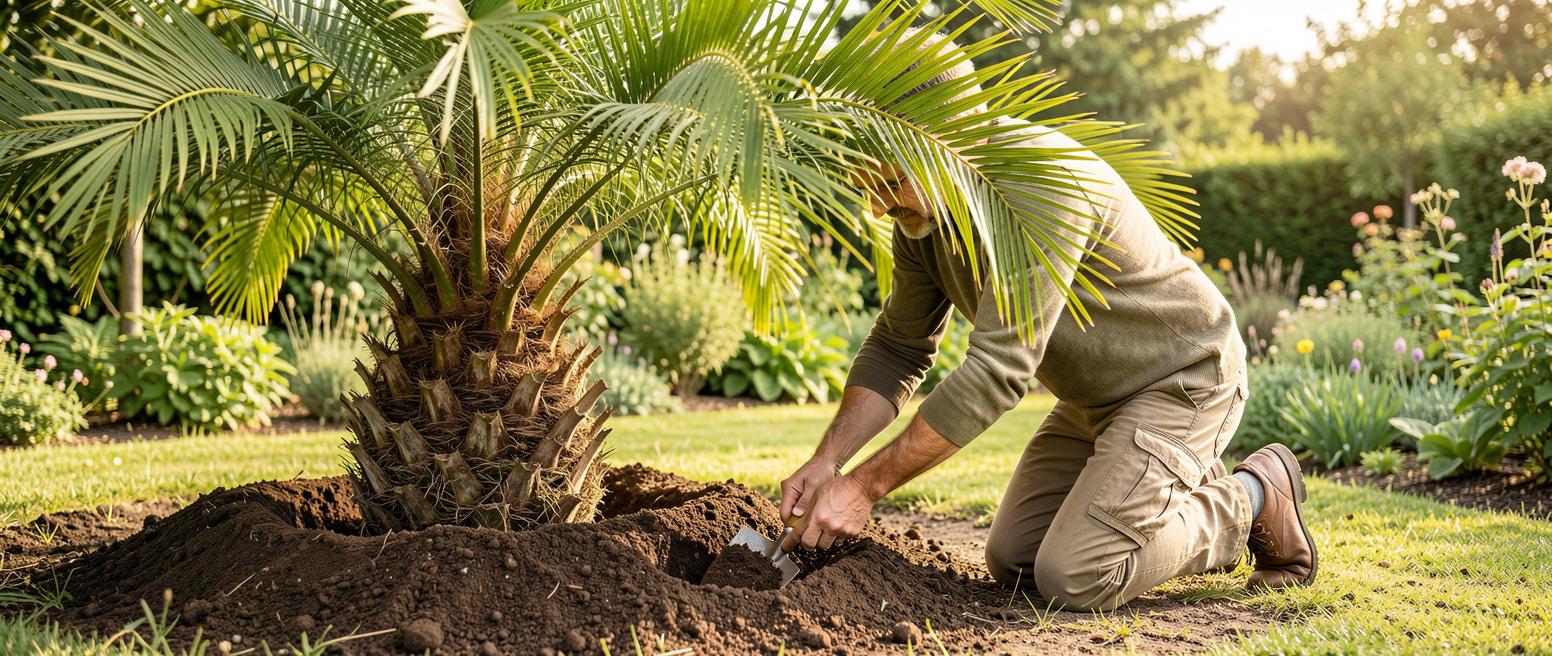
Digging the hole

- Make the hole about one-third larger than the root ball.
- If roots are already emerging from the pot, a quarter larger is sufficient.
- Remove hard clay clods and loosen the subsoil. In new housing developments, there is often a compacted layer that needs to be broken up first.
- Fill the hole with Mediterranean potting soil, mixed with the surrounding earth.
Placing the palm
Remove the plastic container and place the palm at the desired height in the hole. The top of the root ball should be level with the ground, or slightly above it in a wet spot. Planting deeper doesn't help and increases the risk of rot at the base of the trunk.
Then fill with potting soil and gently press it down with your fist. Stamping with your foot is not necessary; you want the soil firm but not compacted.

Water and nutrients
Immediately after planting, water generously, even if the soil appears moist. This flushes out air pockets and ensures the soil makes full contact with the root ball.
- Apply liquid fertilizer, such as Palm Focus, after two to three days. This accelerates root development in the new soil.
- During the first year, water generously two to three times a week; the palm still largely relies on its old root ball.
- In warm weather, also spray the leaves, for example, with a garden hose.
- Keep the palm out of direct midday sun for the first few weeks if it's just come from the nursery.
Planting throughout the year
What applies when
The ground warms up, and the palm has the entire season to root.
Planting can continue, but keep the root ball consistently moist.
Rooting is slower. Provide extra protection around the trunk and crown during the first winter.
Container-grown palms can be planted, but it's better to wait until spring if there's frost in the ground.
What can go wrong
The palm does not grow
If the palm remains the same size after a season, there is a good chance that the roots are not penetrating the new soil. This happens if the added soil differs too much from the surrounding garden soil. In that case, loosen the edge of the planting hole and mix in potting soil.
Yellow or pale leaves
Usually a sign of poor soil or an iron deficiency. Provide liquid fertilizer and, if necessary, add iron. If that doesn't help, magnesium is the next step.
Soft trunk base or foul-smelling soil
This indicates root rot due to too much water. Dig up the palm, add a drainage layer, or replant it in a raised position. Waiting will not help here.
As long as the growth point at the top of the trunk is intact and dry, a palm almost always recovers. Even if it looks poor for a season.
Are you unsure about your spot or soil?
Send us a photo of the location and the planting hole, and we'll take a look with you. You can find potting soil, Palm Focus, and winter protection in our webshop.
Ask your question
Share:
Light requirements of plants
Caring for your palm tree